Skip to content
NAUMS, Inc. — University-Model® Schools
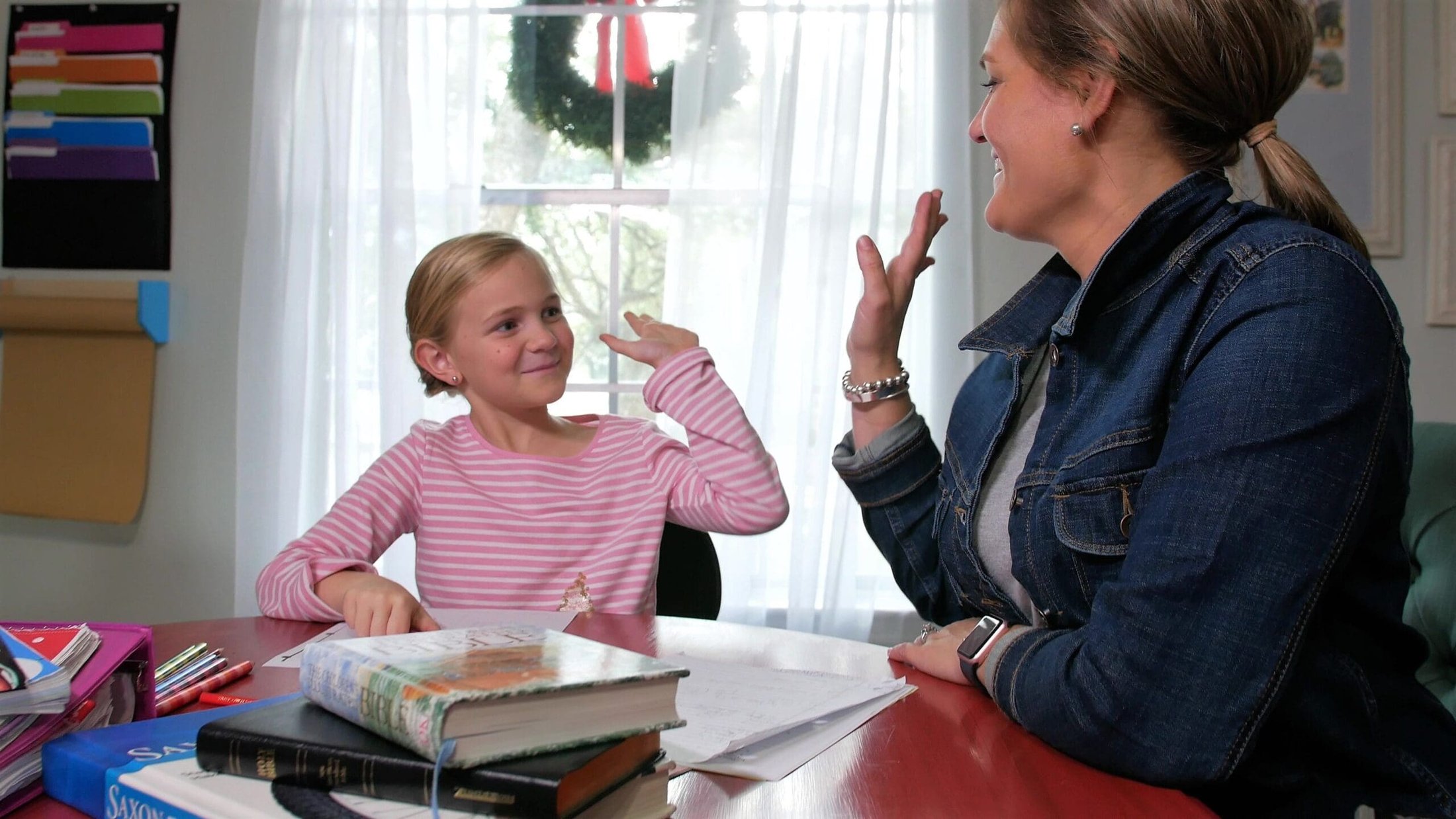
A mother and her daughter share a high-five over schoolwork and a stack of books at their kitchen table on a satellite-classroom day at home.

University-Model® Education: Combining the Best of the Best

University-Model® schools combine the best of professional classroom instruction with the best of home-directed learning. The result is quality, cost-effective, college-preparatory education that gives parents more time for imparting their own faith and values to their children.

Discipleship

The fulfillment of God's purposes on the earth depends on godly families who know Him and make Him known. Parents play a critical role in this mission. They have God-given responsibilities to shepherd their own children by mentoring them to know Christ and to live according to His purposes. God's design is that parents lead their children to understand that they are blessed and have a mission to become blessings in the world.

Christian young people are inundated with worldly messages to pursue goals that are inadequate and ultimately unsatisfying. They are constantly being lured into counterfeit purposes that fall far short of God's highest and best: personal happiness (apart from fellowship with God), popularity and acceptance, relationships and sexual activity, success (academic, artistic, athletic, material, social), and the pursuit of their desires to have, do, and believe what they want with no accountability to an absolute standard of truth.

The purpose of University-Model® education is to cooperate with parents who aspire to train their children to live as responsible Kingdom citizens of the world. The UM school, therefore, emphasizes discipleship instead of evangelization and uses its resources to train young adults who are willing, equipped, and courageous to impact their world in order to glorify God.

A mother kneels in the front hallway to help her son fasten his shoes before school, his red backpack already on his shoulders.

“The ultimate goal is that of producing wholesome, competent men and women of character who make a positive difference for Christ in the next generation.”

Dr. John W. Turner, Jr. — Author, Character Driven College Preparation

Structure

University-Model® schooling is a five-day academic program, with students spending 2–3 days in the central classroom and 2–3 days in their “satellite classroom” at home. Both classrooms are under the supervision of the professional educator.

Lower School

Two campus days recommended for full-time elementary students; three-day programs permitted since 2010.

  • MonHome
  • TueCampus
  • WedHome
  • ThuCampus
  • FriHome

2 days in the central classroom · 3 days in the satellite classroom at home

Middle & Upper School

Campus time generally increases in sixth or seventh grade.

  • MonCampus
  • TueHome
  • WedCampus
  • ThuHome
  • FriCampus

3 days in the central classroom · 2 days in the satellite classroom at home

Campus days shown are illustrative — each University-Model® school sets its own weekly calendar.

Overview

The key to the success of the concept is the integration of a biblically based, parentally guided Christian faith and a sound, teacher-directed academic environment. Parents partner with professional educators in this educational process. Under the supervision of the qualified educator, parents are required to provide oversight of their children's coursework in the satellite classroom at home. They also serve as paraprofessionals by providing extension, enrichment, tutoring, and study-skills instruction.

Lower School

Because the goal is to prepare students to become spiritually and academically independent, University-Model® schools provide a gradual transition from the home to the school. Since younger children typically need more time at home, it is recommended that full-time elementary students attend school two days a week, while being in the satellite classroom three days a week.

Note: In 2010, the NAUMS, Inc. Board of Trustees voted to permit the officials of University-Model® schools to implement three-day programs for full-time elementary students, although the two-day elementary schedule is considered ideal.

Middle School

When students reach the middle school age level (sixth or seventh grade), their time generally increases to three days in the central classroom and two in the satellite classroom. The goal is to introduce upper-level students to a college schedule, where they attend school whenever classes are scheduled instead of spending full days in the central classroom.

Upper School

For upper-level students, large University-Model® schools should provide a college-simulated environment. This requires the school to schedule sixty-minute classes on Monday/Wednesday/Friday and longer classes, usually ninety minutes, on Tuesday/Thursday.

The teachers are in charge of all direct instruction in the central classroom, and they encourage and expect students to learn the material assigned through independent practice and homework. Teachers also provide consistent feedback to students and parents regarding the progress in each class.

University-Model® schools offer a rigorous, college-preparatory education that is second to none. Validation of the University-Model® approach by the entire educational community proves its value as a highly credible alternative model of education. The Cognia accreditation of NAUMS, Inc., along with the growing number of accredited NAUMS, Inc. member schools, supports this belief.

Credibility

The credibility of University-Model® education is validated by its trademark, NAUMS, Inc. certification, and Cognia accreditation.

A young Coram Deo Academy student laughs while coloring a rainbow at his desk
Behind every credential is a child — and the quality of education that families are entitled to when they trust a University-Model® school.

Registered Trademark

To assure the public the quality it is entitled to when it encounters a University-Model® school, the name was trademarked with the U.S. Patent and Trademark Office in 2003. The University-Model® mark has been used consistently since its original registration. A certification trademark can only be used by educational institutions that meet certain standards set by the certifier, so only schools that are certified by NAUMS, Inc. can truthfully call themselves University-Model® educational institutions. It is important to the trademark that only those properly certified by NAUMS, Inc. use it.

Accordingly, NAUMS, Inc. relies on certified schools to assist in policing this effort to ensure the quality the public is entitled to when it encounters a certified University-Model® educational institution. Because the certification trademark is registered with the United States Patent and Trademark Office, efforts should be made to ensure that the federal registration symbol accompanies the mark — for example, “University-Model® schools.” Questions related to the proper use of the trademark, or reports of any misuse of the trademark by others, should be directed to the NAUMS, Inc. Chief Executive Officer at 972-525-7005 .

Although there are numerous schools across the nation attempting to replicate the University-Model® approach, only member schools of NAUMS, Inc. represent the original University-Model® concept.

NAUMS, Inc. is the owner of the trademark, and all materials, products, and website verbiage are the intellectual property of NAUMS, Inc., doing business as University-Model® Schools International (UMSI).

Call the NAUMS, Inc. office: 972-525-7005

NAUMS, Inc. Certification

The NAUMS, Inc. certification process protects and maintains the identity and integrity of University-Model® education. Successfully completing this process prepares schools for school accreditation. Certification standards have been established for the major components of University-Model® education, including Academics, Character Development/Family Ministry, Student Activities, and Program Support.

The UM certification standards are cross-referenced to the Cognia accreditation standards. Cognia accreditation of the NAUMS, Inc. corporation opened the door to Cognia accreditation of University-Model® schools.

Cognia Accreditation

Cognia is the largest community of education professionals in the world. It is a non-profit, non-partisan organization that conducts rigorous, on-site external reviews of PreK-12 schools and school or corporate systems (like NAUMS, Inc.) to ensure that all learners realize their full potential. While their expertise is grounded in more than a hundred years of work in school accreditation, Cognia is far from a typical accrediting agency. Their goal is not to certify that schools are good enough. Rather, their commitment is to help schools improve.

Only member schools are eligible for NAUMS, Inc. certification and the consultative services required for successful Cognia accreditation. Once member schools are certified by NAUMS, Inc., they are automatically eligible for Cognia accreditation.

UM Schooling vs. Non-UM Schooling

The Classical University-Model® School

Several University-Model® schools proudly identify themselves as “Classical, Christian, and University-Model®” schools. Highly valuing the excellence they have found in classical curriculums while also seeing the flexibility and advantages of following a UM schedule, they have found the best of both worlds.

Formation of the UMSI Classical School Division

In 2015, NAUMS, Inc. consulted with leaders of our classical schools, formed an exploratory team, and developed a Classical School Division among the member schools in UMSI.

Its purpose is to equip classical University-Model® schools with the tools and resources that continue to help them remain Classical, Christian, and University-Model® schools. At the 2016 National Summit, Christopher Perrin, a recognized leader in the classical school community, was a dynamic keynote speaker, while day-long seminars and workshops were held for leaders and teachers in our classical schools. In addition, NAUMS, Inc. set out to build a national classical school consulting team to more adequately assist leaders and teachers in the classical model.

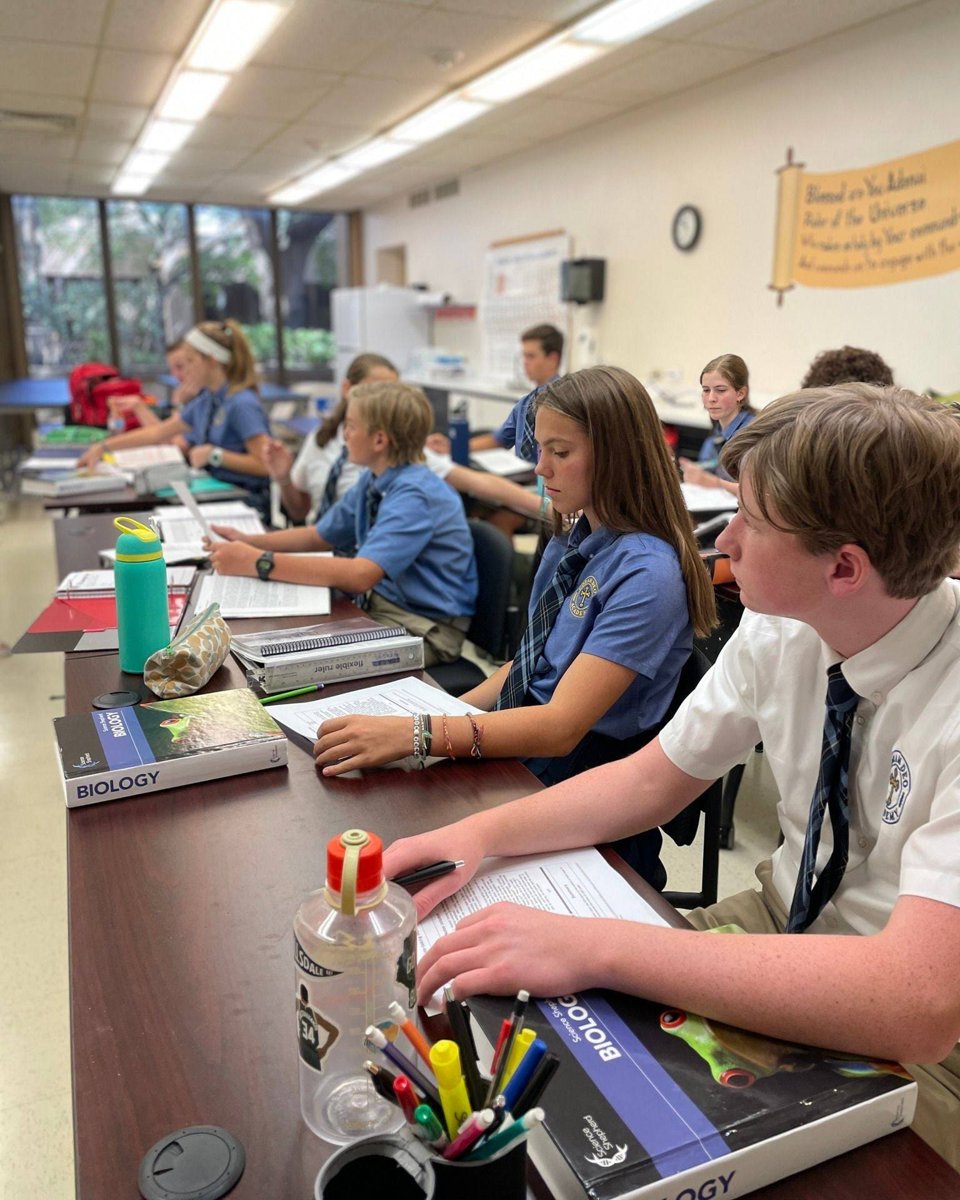
Uniformed students at Coram Deo Academy work through a biology lesson at long classroom tables, textbooks and papers open in front of them.
Students at The Oaks Classical Christian Academy

Supporting the Classical Model

Leaders in the University-Model® Schools International community, specifically those in the Classical School Division, along with guidance from NAUMS, Inc. leadership, support classical UM schools in a variety of ways:

  • Christian Classical Curriculum Development
  • Classical Philosophy, Methods, and Best Practices
  • Teacher Training for the Classical Classroom
  • Parent-Teacher Communication in the Classical Model

Forming Souls, Not Just Transmitting Skills

Teachers within a Christian classical school believe education is about forming souls, not just transmitting skills. The goal of education is to form a mature person whose thoughts, emotions, and desires reflect truth. In classical schools, we want children to become strong readers, but we also want them to read well: we think WHAT they read is as important as THAT they read. We look for books that strengthen the student's moral imagination and inspire a love for what is good, true, and beautiful.

Classical educators seek to cultivate wisdom and virtue as their primary goal. Although classically educated students do well on standardized tests, we don't measure success by scores, but rather by the development of a mature person who loves learning and who makes the connection between learning and life — one who ties knowledge to responsibility and struggles to live not for himself, but for God and his neighbor.

In order to develop wisdom and virtue, classical educators make use of the humanities — the timeless works of history, literature, and poetry — along with the arts of the trivium and quadrivium. The trivium consists of three arts related to human language and subjects taught within the classrooms. The first, the art of grammar, includes reading, writing, interpreting, and judging written texts. The second, the art of logic, teaches critical thinking and develops the faculty of reason. And the third, the art of rhetoric, is comprised of beautifully ordering words so that they might persuade. For both Plato, a Greek, and Quintilian, a Roman, wisdom, justice, and eloquence are inextricably linked; a good rhetorician is “the good man speaking well.” In addition to the trivium, classical educators also consider understanding the created order to be of crucial importance. Thus, the quadrivium consists of four arts related to number — arithmetic, geometry, astronomy, and music — which we approach today through mathematics and the sciences.

Although classical education was developed by the early Greeks, it came to fruition in the Christian church. Therefore, to speak of classical education is also to speak of Christian education. The best of the ancient Greeks and Romans desired to live lives of piety and virtue, and with the coming of Christ their imperfect vision of man was fulfilled. The cardinal virtues of prudence, temperance, justice, and fortitude were crowned with the theological virtues of faith, hope, and love. Classical education asks the questions: Who is the good man? What is the good life? Christianity answers them: The good man is Jesus Christ, and the good life is the one which follows Him.
Take the Next Step with University-Model® Education

Whether you are a parent seeking a school that partners with your family or a leader called to start one, NAUMS, Inc. is ready to help.